
What Happens During an Oil Spill Response in Alaska?
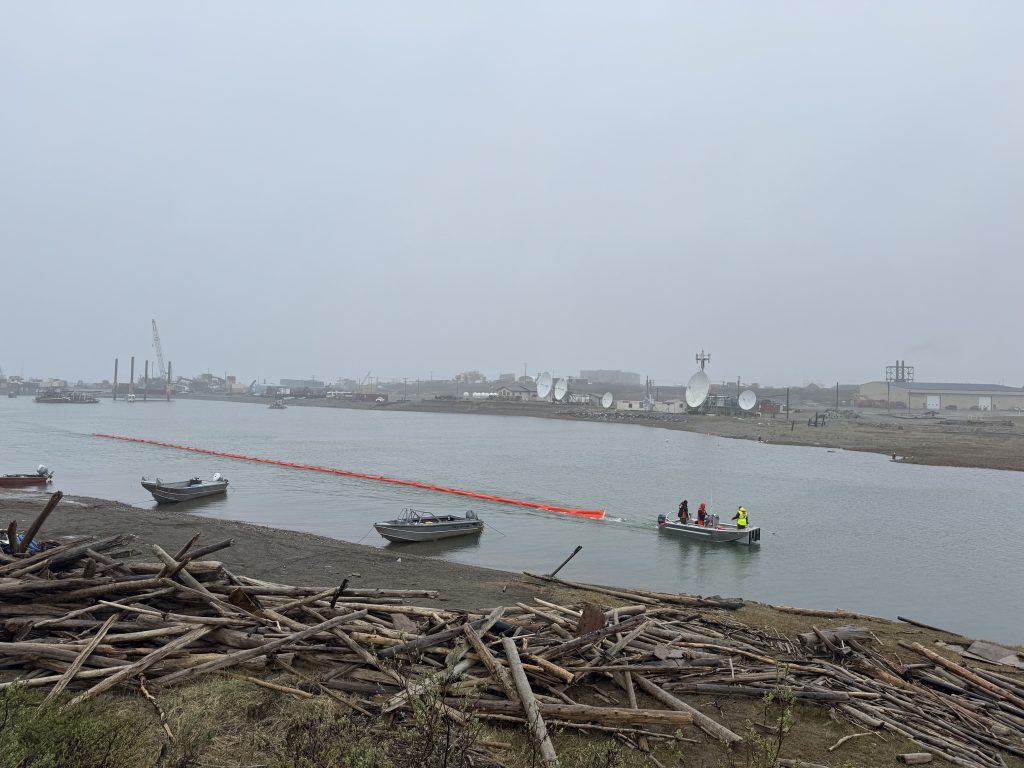
When an oil spill occurs in Alaska, the visible response may include vessels, crews, containment boom, and other equipment arriving at the scene. But those field activities are only one part of a much larger process.
Effective emergency response depends on the preparation behind it: people who know their roles, plans that have been tested, resources that can be mobilized, and partnerships that have been strengthened before an incident occurs.
So, what happens when an oil spill is reported in Alaska?
1. The Incident Is Reported
The response begins with notification.
Early information helps responders understand the situation and determine what actions may be needed. Depending on the incident, that information can include the location, the nature of the release, the circumstances surrounding the incident, and other information needed to begin assessing response requirements.
ACN regularly works with its members to test notification procedures before a real incident occurs.
During the spring, ACN supported five member spill notification exercises. These exercises tested notification procedures, response timelines, and mobilization planning.
The purpose is straightforward: practice the process before it is needed during an actual emergency.
2. The Situation Is Assessed
Once an incident is reported, responders need to understand what has happened and what resources may be required.
The appropriate response depends on the circumstances of the incident. A response may require different personnel, equipment, vessels, contractors, technical expertise, or other resources depending on the situation.
Alaska adds another layer of complexity.
Vast distances, remote operating environments, weather, transportation, and access to resources all have to be considered when planning for an emergency.
That is why response preparedness cannot begin when an incident occurs. Plans and capabilities have to be developed and tested in advance.
3. Response Plans Are Put Into Action
Preparedness plans provide a framework for responding, but exercises help determine whether those plans work as intended.
During the spring, ACN participated in the Trans-Alaska Pipeline Valdez Tanker Exercise, an industry and multi-agency exercise that focused on validating response timelines, available equipment, and mutual-aid coordination with other Oil Spill Removal Organizations.
That kind of coordination is particularly important during a large-scale incident, when no single organization may have every resource required.
Exercises provide an opportunity to identify gaps, clarify responsibilities, and strengthen relationships before an actual response.
4. People and Resources Are Mobilized
Once response needs are identified, the appropriate resources can be mobilized.
Depending on the incident, that could involve response personnel, vessels, equipment, contractors, logistics support, or other specialized capabilities.
The goal isn’t simply to deploy as many resources as possible. It is to coordinate the resources needed for the specific situation.
For an organization operating across Alaska, that requires preparation and relationships that extend beyond a single location.
5. Response Operations Are Coordinated
A complex oil spill response involves many moving parts.
Responders may need to coordinate with the Responsible Party, government agencies, other response organizations, contractors, vessel operators, and other partners.
For larger or more complex incidents, the Incident Command System provides a structure for organizing those activities.
ACN’s role in the U.S. Coast Guard Arctic PREP Exercise provides a useful example.
Working with the U.S. Coast Guard and other federal partners, ACN assisted in developing the Incident Action Plan and served as the designated Oil Spill Removal Organization during the exercise.
The exercise scenario involved a foreign-flagged vessel exercising the right of innocent passage that grounded near Point Barrow, resulting in a significant oil spill.
The exercise went beyond oil spill response alone. It also evaluated homeland security, interagency coordination, and information sharing during a complex Arctic maritime incident.
6. Field Response Begins
Once the response organization and objectives are established, field activities can begin based on the needs of the incident.
Those activities can include containment, recovery, assessment, monitoring, logistics, and other response actions.
The specific tactics depend on the circumstances. There is no single response approach that applies to every spill.
That’s particularly important in Alaska, where conditions and access can vary dramatically from one location to another.
7. Communication and Coordination Continue
Response isn’t a one-time decision.
As conditions change and new information becomes available, responders need to communicate and adjust their plans and activities as appropriate.
Exercises are valuable because they provide an opportunity to practice this coordination.
The spring exercises supported by ACN brought members, industry participants, government agencies, and other Oil Spill Removal Organizations together to test procedures and strengthen coordination.
That work helps build relationships and familiarity before an actual emergency requires them.
8. The Response Is Evaluated
Preparedness doesn’t end when an exercise or response is complete.
Exercises provide an opportunity to identify lessons, evaluate procedures, and determine where capabilities can be strengthened.
That’s one reason ACN’s preparedness work extends beyond equipment.
People need to be trained. Plans need to be validated. Partnerships need to be maintained. And response capabilities need to be continually evaluated.
The goal is not to predict exactly what the next emergency will look like. It is to build a response system capable of adapting to different circumstances.
Preparedness Happens Before the Emergency
An effective oil spill response begins long before an incident occurs.
For ACN, that means preparing people, validating plans, and strengthening partnerships before they are needed most.
The spring’s nine exercises and training events provided opportunities to test response procedures, strengthen coordination with members and government agencies, and reinforce the operational capabilities needed to respond safely and effectively across Alaska.
From member notification exercises to multi-agency tanker exercises and complex Arctic scenarios, each exercise provides a different opportunity to practice.
Because when an emergency occurs, there is no time to figure out how the response system is supposed to work.
The preparation has to come first.
